
You just read that Parkes Weber means an artery connects too directly into a vein. Here’s one specific way that happens: through a tangle.
Picture that same highway on-ramp from before, but instead of merging cleanly, it spills into a snarl of side streets first — cars looping through a maze of connections before finally reaching the residential street on the other side. That tangle is what doctors call a nidus, and it’s the core feature of the AVM type of Parkes Weber. The feeding artery is often visibly enlarged, feeding into this knot of abnormal vessels, which then drains into veins that were never built for that kind of traffic.
This tangle matters because it’s not just fast — it’s unpredictable. The knot can grow, and the pressure moving through it can cause real wear on the surrounding tissue over time: bleeding, skin breakdown, and in more significant cases, strain on the heart from constantly pumping against that shortcut.
See the “Three Mixed Up
— graphic ◈ —
Legacy Syndromes” graphic in the sidebar — the KTS panel shows this layered architecture: capillary, venous, and lymphatic, all slow-flow, all working together to create what you see on the surface.
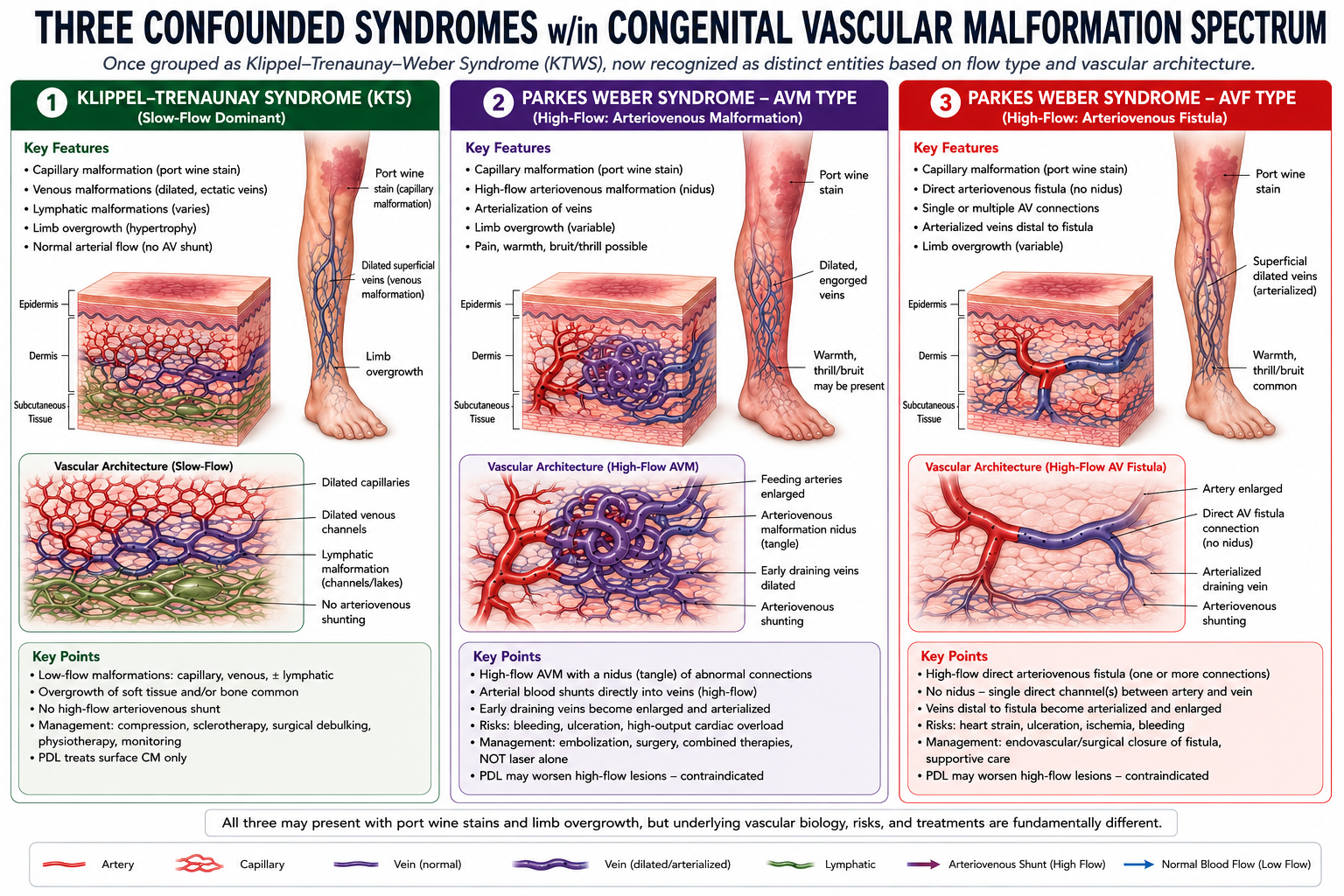
What this means for you: this type is not treated with laser, because laser only addresses the surface, not the tangle underneath. Treatment usually means embolization, surgery, or a combination — closing off the tangle itself rather than just lightening the skin above it.
Want the full clinical picture? The Compendium has it, whenever you’re ready.